Business Systemisation Expert · working with AI · London
Your business should run without waiting for you.
We find where AI pays off, build it into how you work in four to six weeks, and leave you a system that runs itself. I sit next to the founder and build the system.
Results for clients, and still counting
Numbers my clients' businesses run on.
Anatomy of a business
Look at this business. One person. Every part connected.
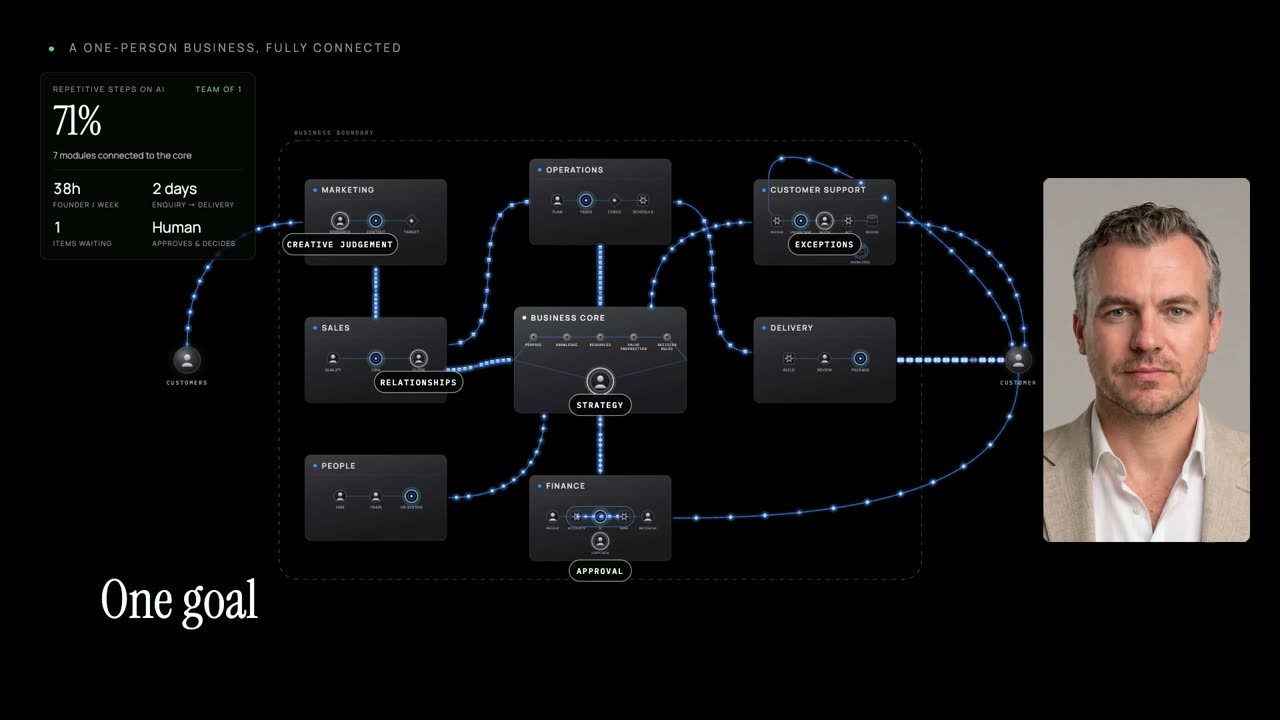
Forget the idea of a company. No building, no staff.
Someone out there has a need, and you have the knowledge to meet it. The moment you connect and exchange value, your business has begun.

You already have this.
At the centre is the core: your purpose, what you know, what you can offer, the promise you make. Information becomes a decision. A decision becomes an action. And that action becomes value for someone.
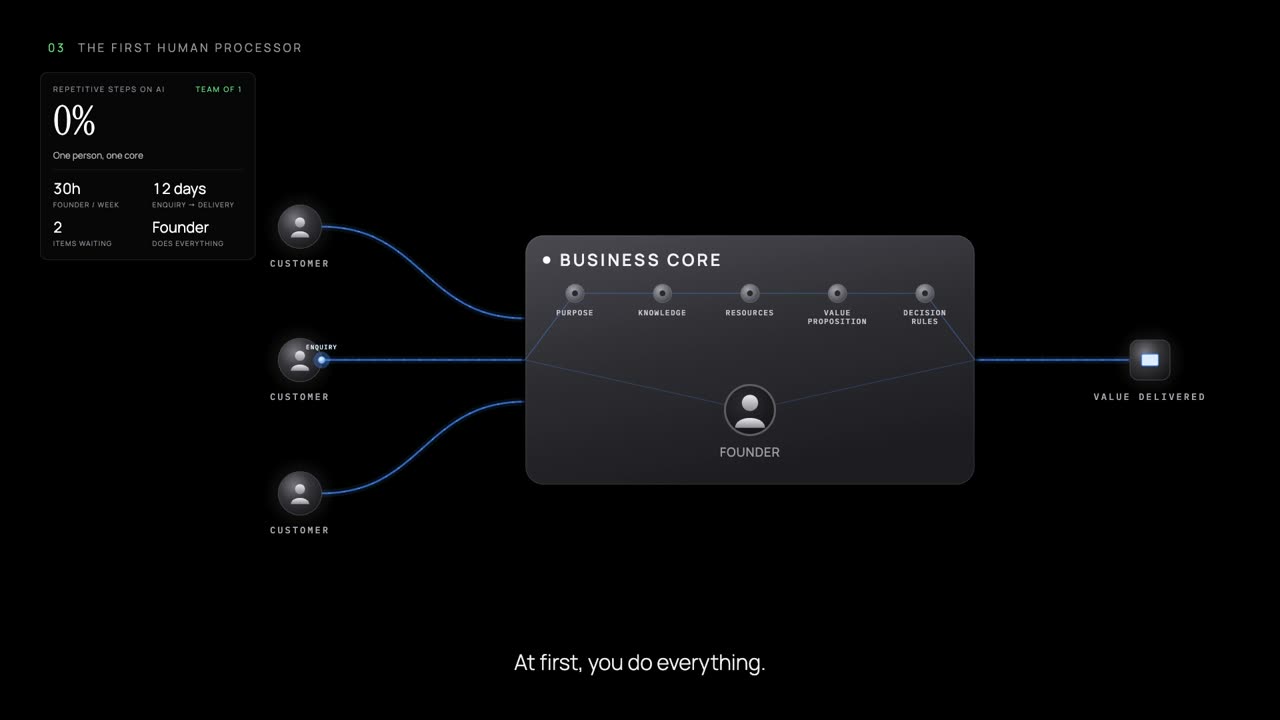
It feels like you're failing. You're not.
You sell, you reply, you decide, you deliver, you chase the invoice. Then demand grows and a queue forms. You've simply reached the limit of the system. And a system can be redesigned.
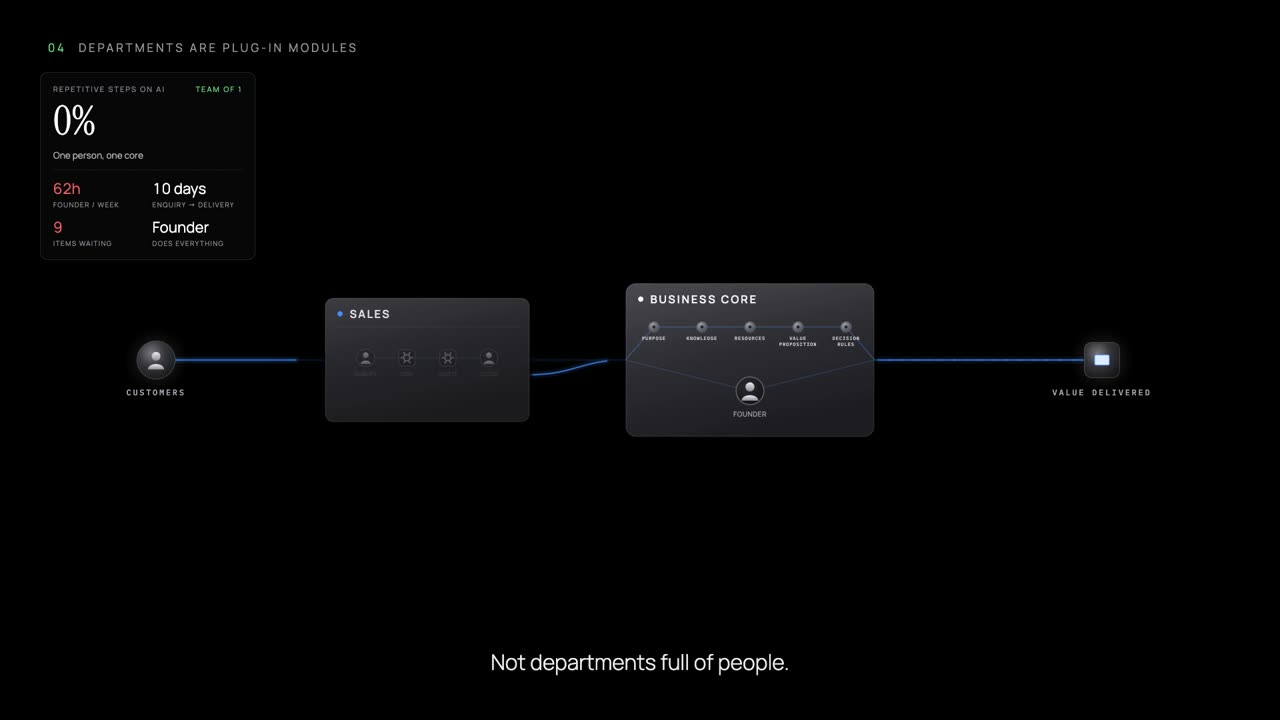
Not departments full of people. Capabilities you plug in.
Sales brings demand in. Delivery turns promises into results. Finance keeps the money moving. Support looks after people once they’ve bought. Each module does one job, and only needs the right information to do it.
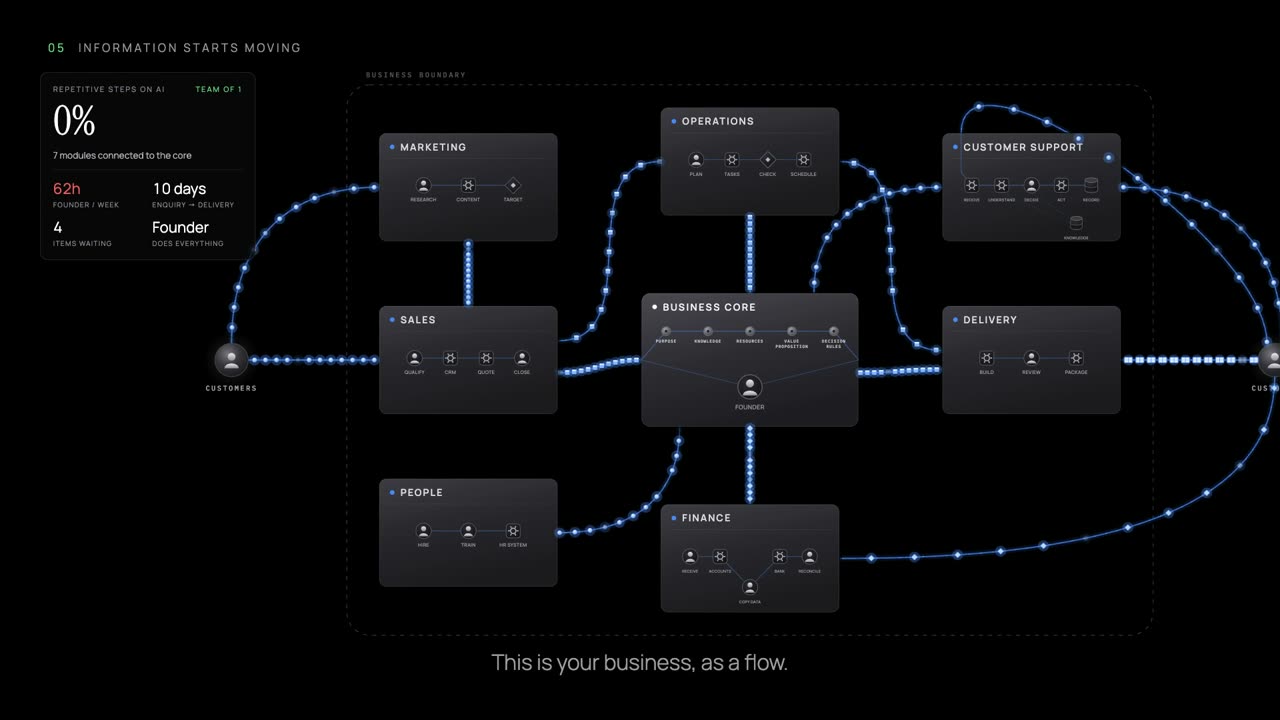
Your business, as a flow.
A message becomes a lead. A lead becomes an opportunity. An opportunity becomes an order. An order becomes a task, and that task becomes the thing your customer is happy to pay for. When you can see it like this, it stops being overwhelming.
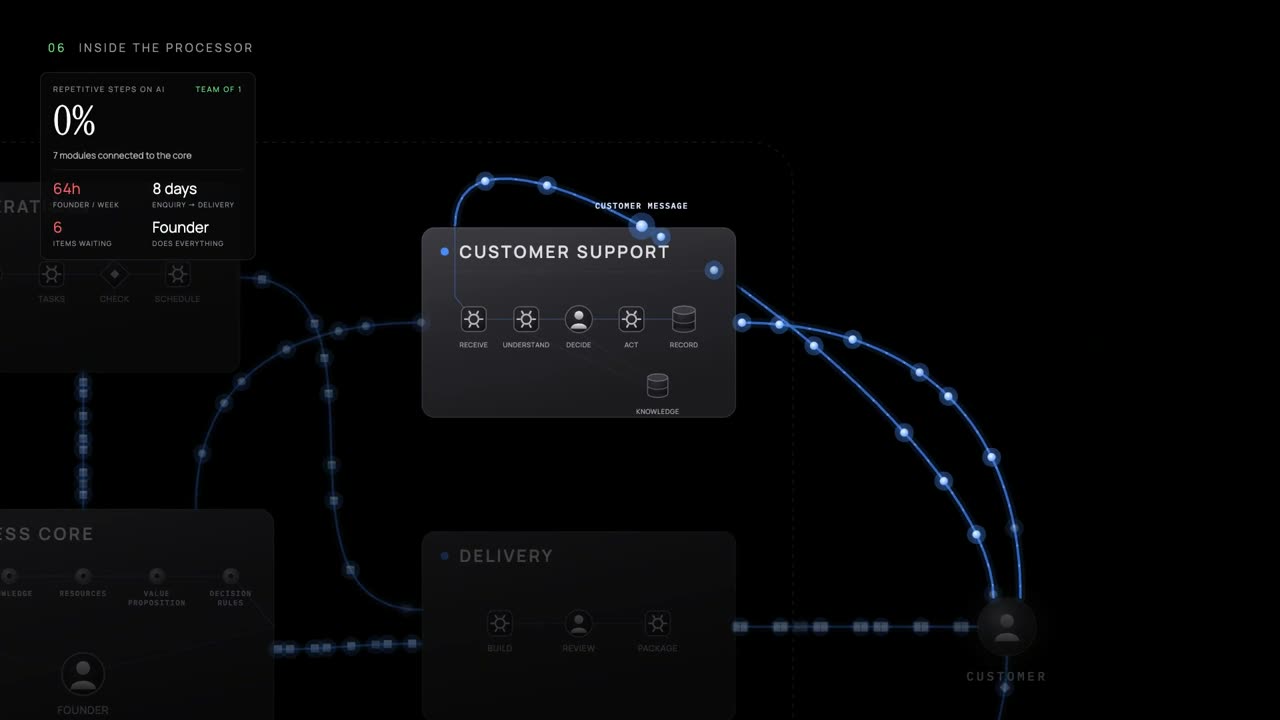
Receive. Understand. Decide. Act. Record. That's all it is.
When something's missing, it goes back. When something's learned, it's kept as knowledge. You do some steps. A tool does others. And some steps only exist because two tools can't talk to each other.
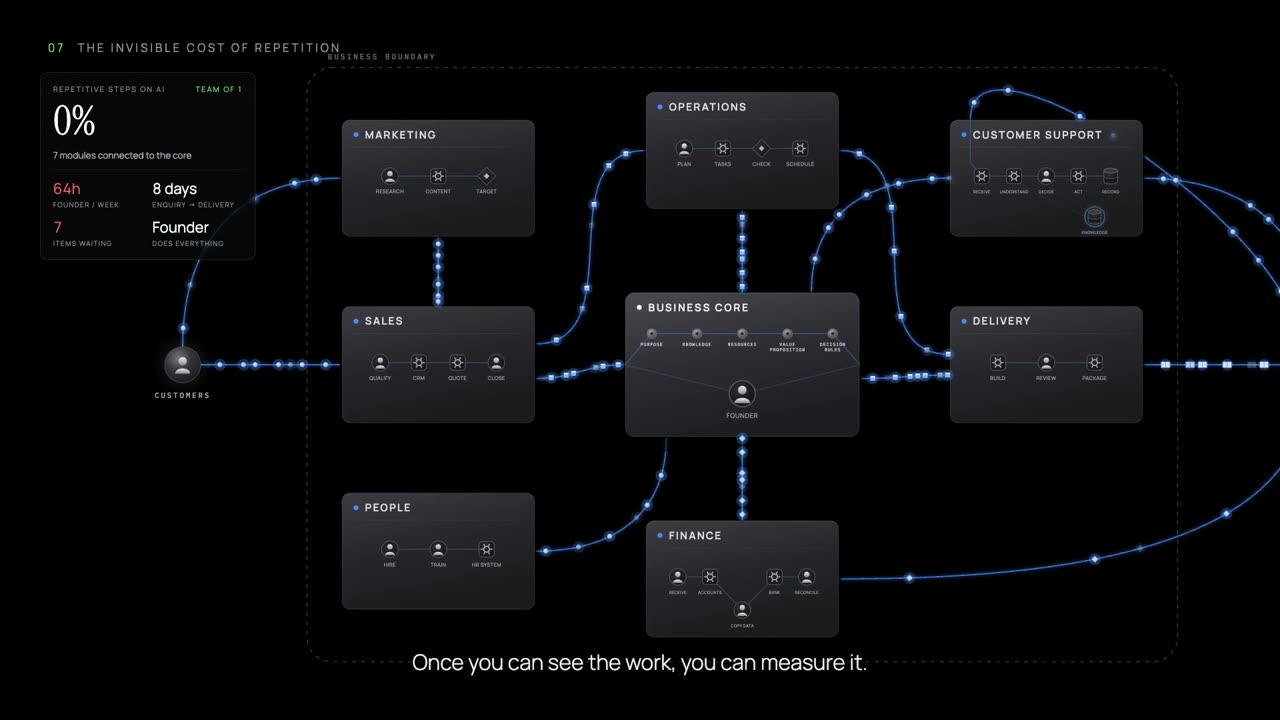
Once you can see the work, you can measure it.
Where does it wait? What do you repeat every single day? What are you copying by hand that already exists somewhere else? Most of your week isn't the work only you can do. It's repetition, and repetition is exactly what AI is good at.
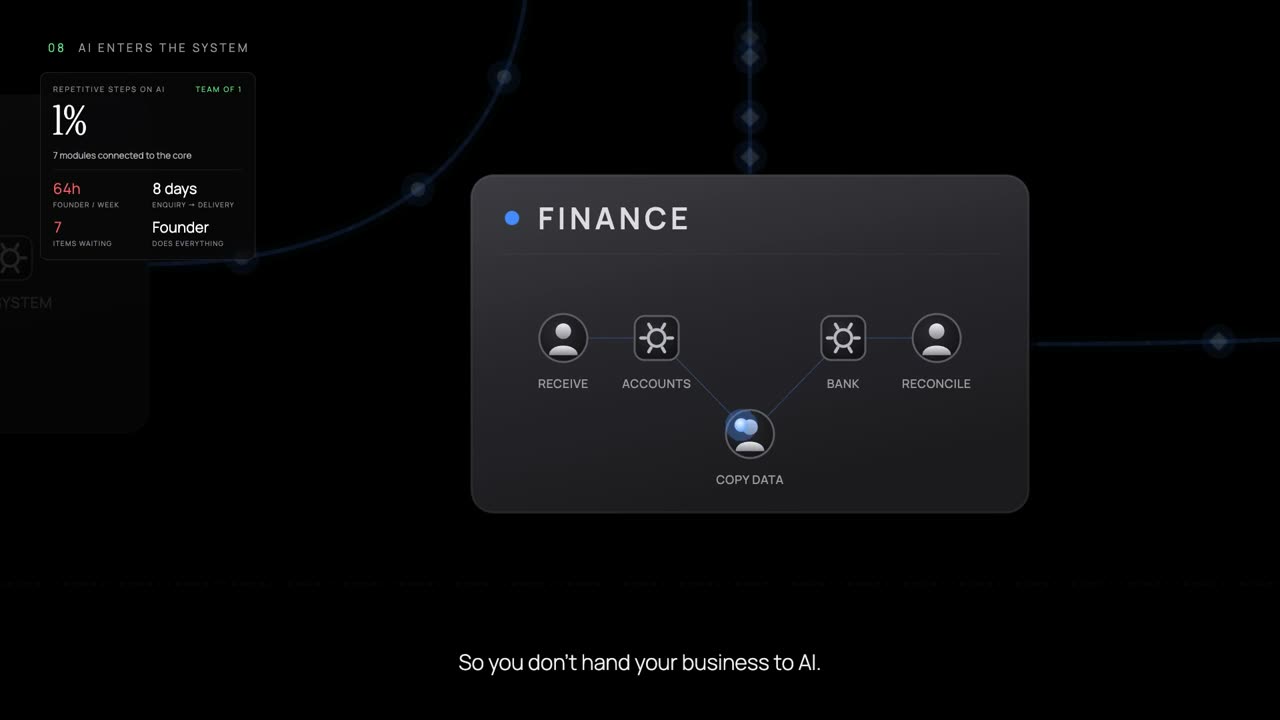
You give AI one job, one step in the flow.
You don't hand your business to AI, and you don't buy a tool and hope. Same pipelines, same knowledge, same rules. You test it. You approve it. Then you connect it.
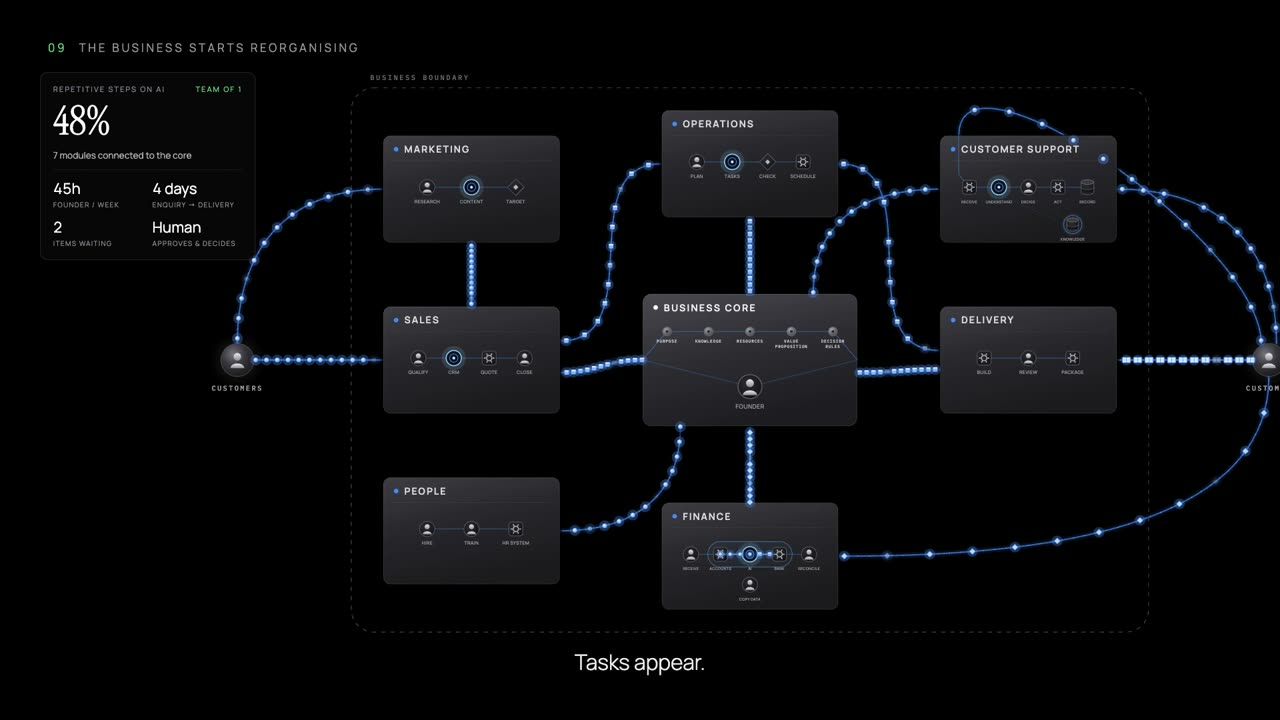
The repetitive work moves across.
Enquiries sort themselves. Tasks appear. Approvals come to you. Updates go out. Everything is recorded. Nothing was torn down. The system you built is still there. It just flows.
How we work together · The Handover Method
Five steps from first call to a business that runs itself.
Steps one and two happen in the free Deep Look. Steps three to five take four to six weeks, with a call every week.
Where work waits
What you own at the end
An in-house system that runs on your accounts, not mine.
Built together, handed over and tuned until it runs without me.
Works around the clock
Alerts, reports and routine work keep running at night and at weekends.
Your own keys and subscription
It runs on your own API keys and your own Claude subscription. You hold every account.
Secure and encrypted
Your data stays in systems you control, encrypted, with access you decide.
No dependencies you can't manage
No third parties in the middle, no platform you're locked into, nothing that stops when I do.
Built on today's technology
The newest AI models, wired into the way your business already works.
Handed over, then tuned
After four to six weeks it's yours. We tune it until it runs without me.
Client stories
What changed for them.
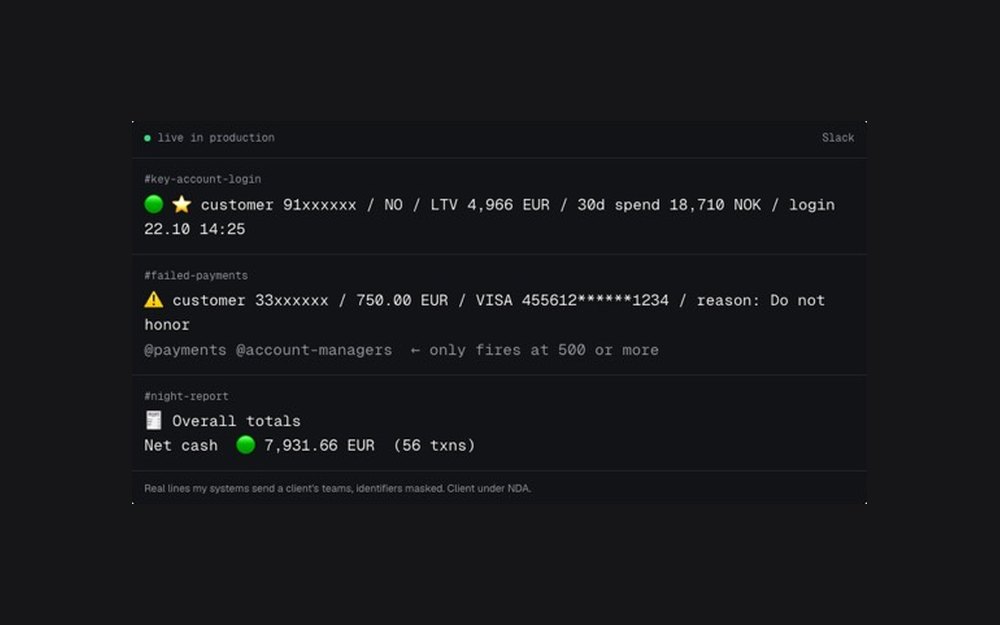
How six teams stopped finding problems too late
€600K a month in revenue now runs on the alerts, reports and AI triage I built.
Read the story →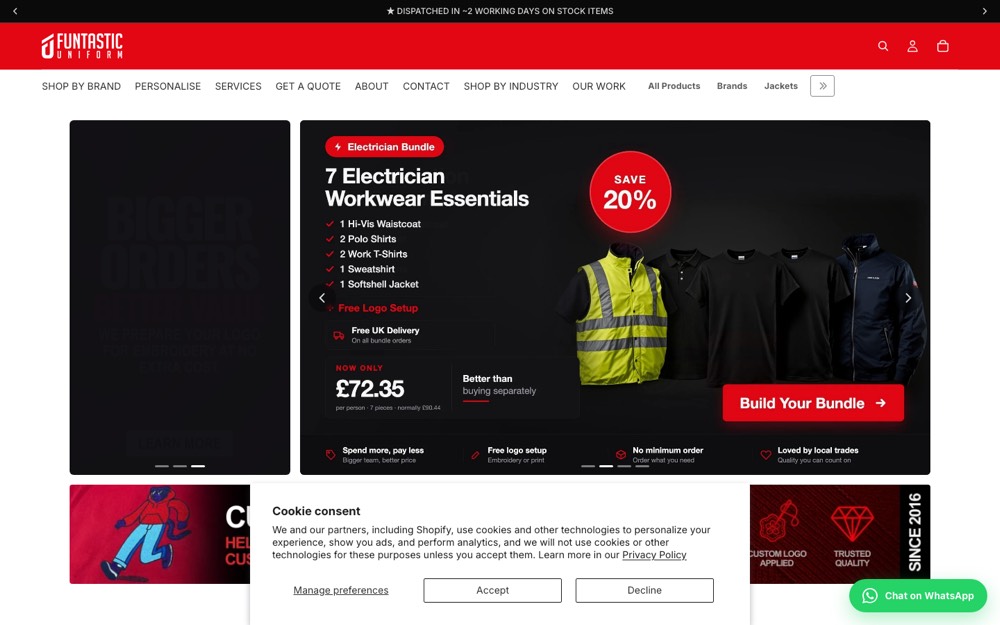
How a uniform maker took back its catalogue
£500+ in organic orders in its first two weeks, with no marketing or IT team.
Read the story →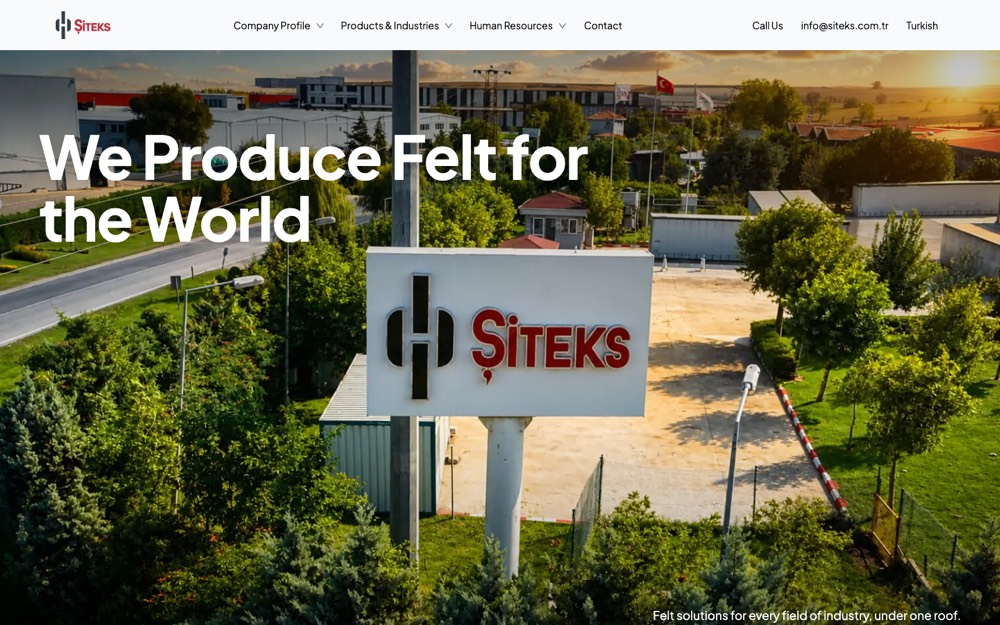
How a felt manufacturer gets every enquiry within seconds
A Turkish and English site. Every enquiry and job application reaches their inbox within seconds.
See the site →Built for my own companies
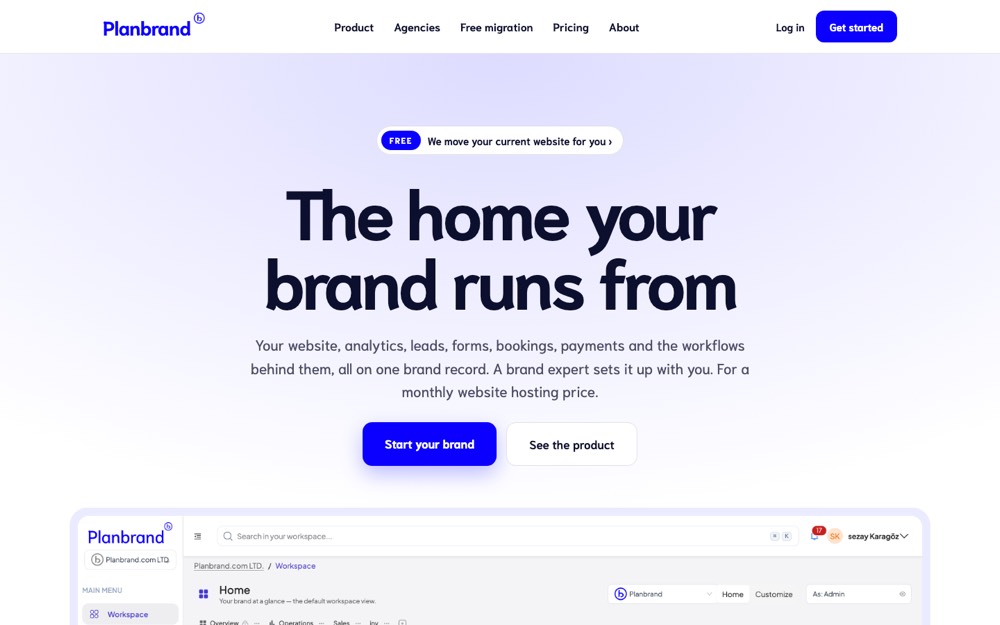
A brand operating system, with AI in the back office
Website builder, customer pipeline and analytics down to each section of a page.
See the product →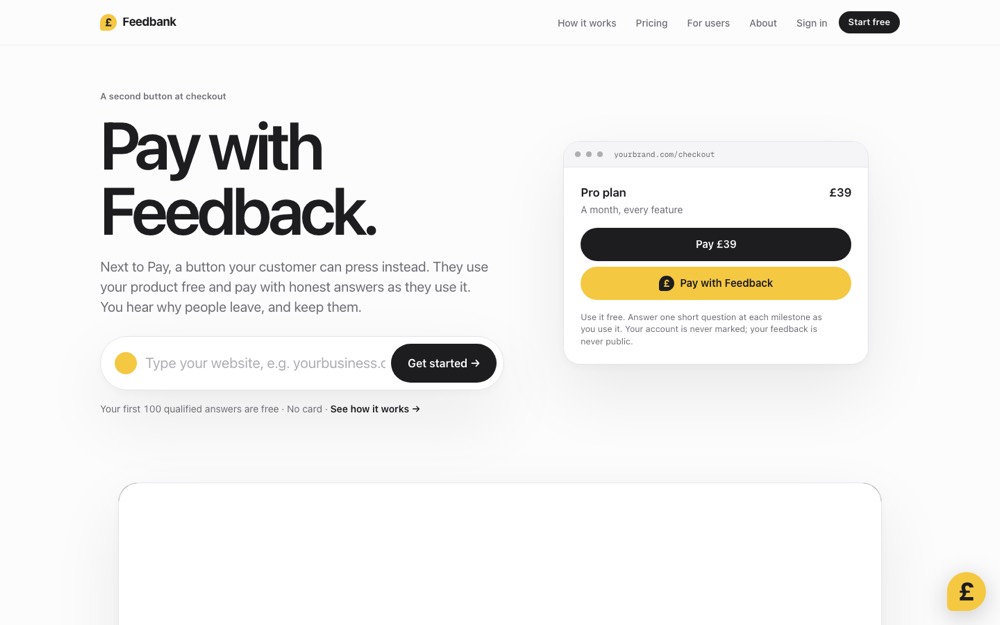
A product where customers pay with honest feedback
Built from concept to live: apps, a widget and AI scoring of every answer.
See the product →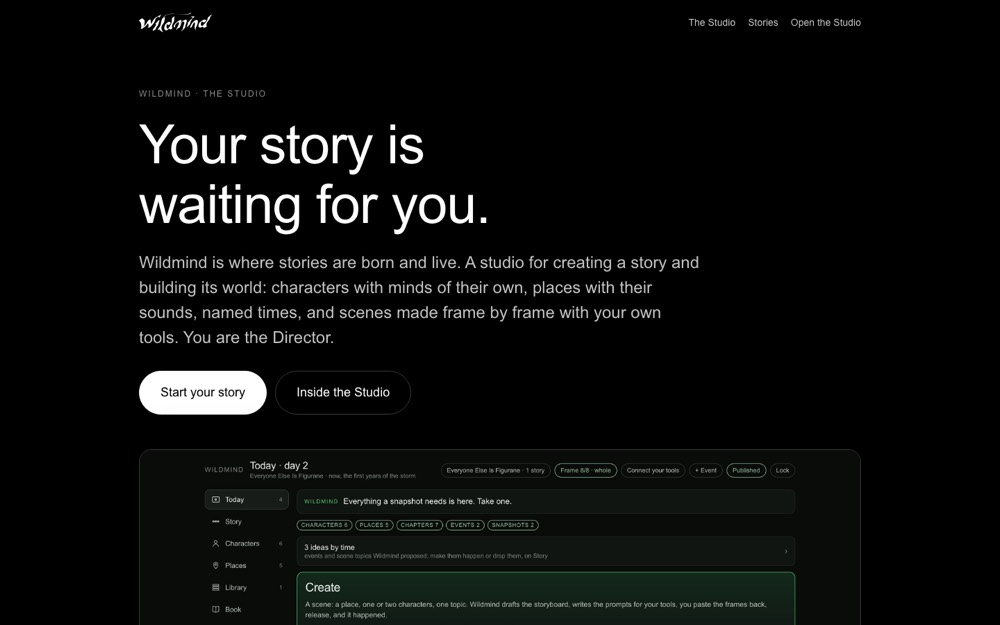
A map of the mind, made from your own story
Your story mapped in time, each day's plan beside the real one, and goals that move only on evidence.
See the product →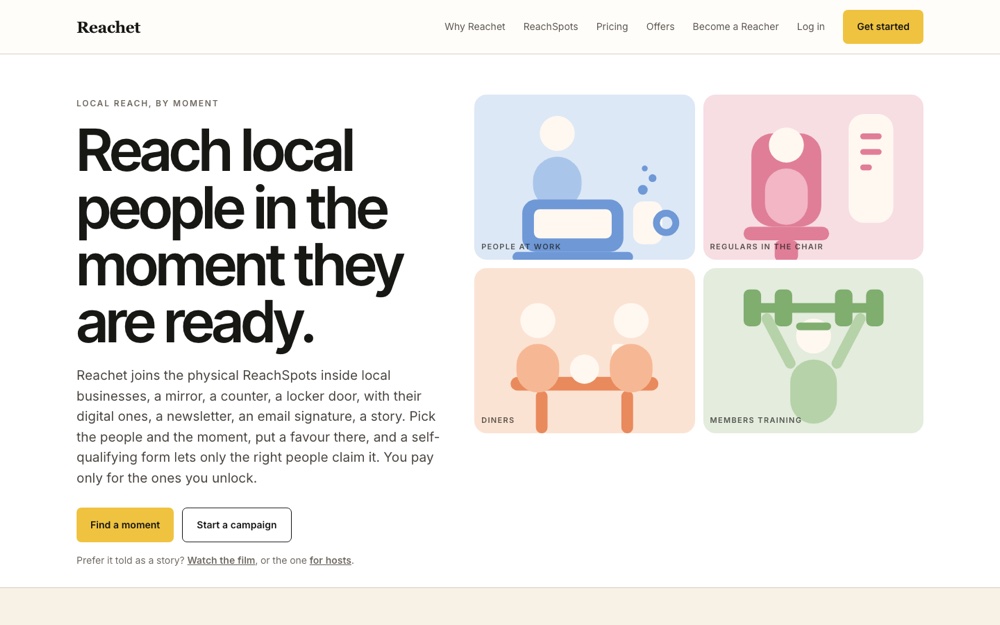
Local referrals you can choose
Businesses place offers inside other local businesses, and pay only for the people who qualify.
See the product →What I learnt · nine podcast episodes, a hundred branding projects, three SaaS products, four VC pitches that didn’t land
Here is what I learnt.
01 · One pitch, one idea.
Don't pitch more than one idea.
02 · Market first. Then one problem.
Define the market first. Research it, then propose one concept that solves a single problem.
03 · Financials ready. Not on screen.
Keep your financials ready, but not on screen. Weak numbers on a slide become the first hard question, and you lose your excitement. Not finding them when asked makes investors think you're hiding something.
04 · Pick your market on verified research.
Pick your geography and market based on up-to-date research and verified surveys.
05 · Know what you're built on.
Know the technology your product is built on.
06 · The next step. Not ten.
Mention the next step, not ten steps ahead. Ten steps ahead makes you look like a dreamer, not a founder.
07 · Know every competitor.
Know your competitors very well. If they name one you didn't know, that's the end.
08 · Keep AI out of the pitch.
Keep AI out of your pitch. It's the one part people don't want to see AI in.
09 · Ready as if the money came tomorrow.
Have your trademark, ICO registration, legal entities, bank account and company documents ready, as if the money came tomorrow.
10 · Plan for what money would unlock.
Bring a serious plan for what you could have done but couldn't, for lack of money.
11 · Invest in your mental health.
Keep your mental health stable, and invest in it. No one invests in a good startup run by a depressed mind.
12 · They check your LinkedIn first.
Keep your LinkedIn focused on what you pitched. It's the first thing they check after a good meeting.
13 · Hungry for the work. Not the money.
Even if you're in debt, don't look hungry for money. Be hungry to give your time to the startup you pitched, if that's really true.
14 · 7 of 10 things no AI can replace.
Have at least seven out of ten things that can't be replaced, even by AI or a team of a hundred. Your domain name. Your experience. Your connections.
15 · Make yourself removable.
Make yourself removable from your startup when the day comes. Otherwise they're investing in your personal journey, not a company.
16 · Write your dos and don'ts down.
Write down your dos and don'ts, like your founder salary for the next year, or until a milestone.
17 · Name every risk.
Name every risk, including that any vibe coder could copy your product, and how you'd keep your company accountable and undamaged.
18 · Keep coming back.
If the conversation turns and they criticise you, take notes, work on it and come back. Keep coming back.
19 · One, two and three-year plans.
Share your one, two and three-year plans, and how coming changes could shape them, so they know you're not planning blindly.
Why owners work with me
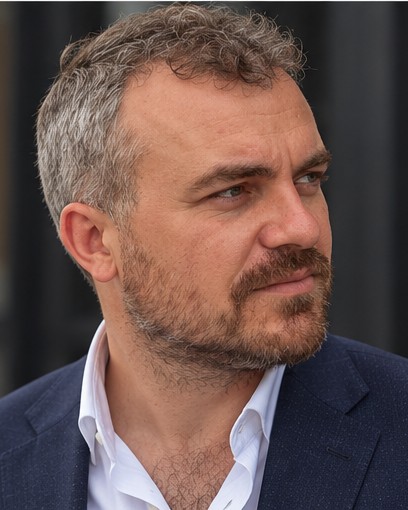
I've been the owner everything waits for.
I've built and run my own companies, so I know what lands on the owner's desk. Before that, I spent thirteen years designing brands and products, ten of them in London, including sites used by more than two million people a month at GVC Group.
I'm the founder of Planbrand (Planbrand.com Ltd, London, 2024): the platform this site and my clients' sites run on, with their customers, forms, bookings and outreach in one place. I built it so a small company could run on one login, and I use it with every client.
Today I direct AI to build what I design, and I've worked with more than 40 businesses. I live in London and work one-to-one with every client, a few at a time, so the person you talk to is the person who builds it.
Questions
Before your Deep Look
What happens in the Deep Look?
We look at your business together. You leave knowing what AI could take on, an estimated cost and timeline, and the main benefits. What you do with it is up to you.
How long does a project take?
Four to six weeks, with a call every week. At the end you have a system that maintains itself.
What does it cost?
You get an estimated cost and timeline in the first call, before anything starts.
Who owns it?
You do. It runs on your own API keys and your own Claude subscription, inside systems you control, with no third parties in the middle.
Do we need to change our tools?
Rarely. I build on the systems you already run and read their data safely.
What if AI isn't the answer?
Then I'll tell you in the Deep Look. If a spreadsheet works, keep the spreadsheet.
You are the business.
Your knowledge is the core. AI can run the modules. And you get to stay where you matter most. Ideas. Relationships. Judgement. You’ve got everything you need to start.
Free Claude Implementation Audit
Book a Deep Look.
A first call on your business: what AI could take on, an estimated cost and timeline, and the main benefits for you. Free, and you keep the notes whether or not we work together.
I read every request myself and reply within two working days.
Or write to hello@sezaykaragoz.com